
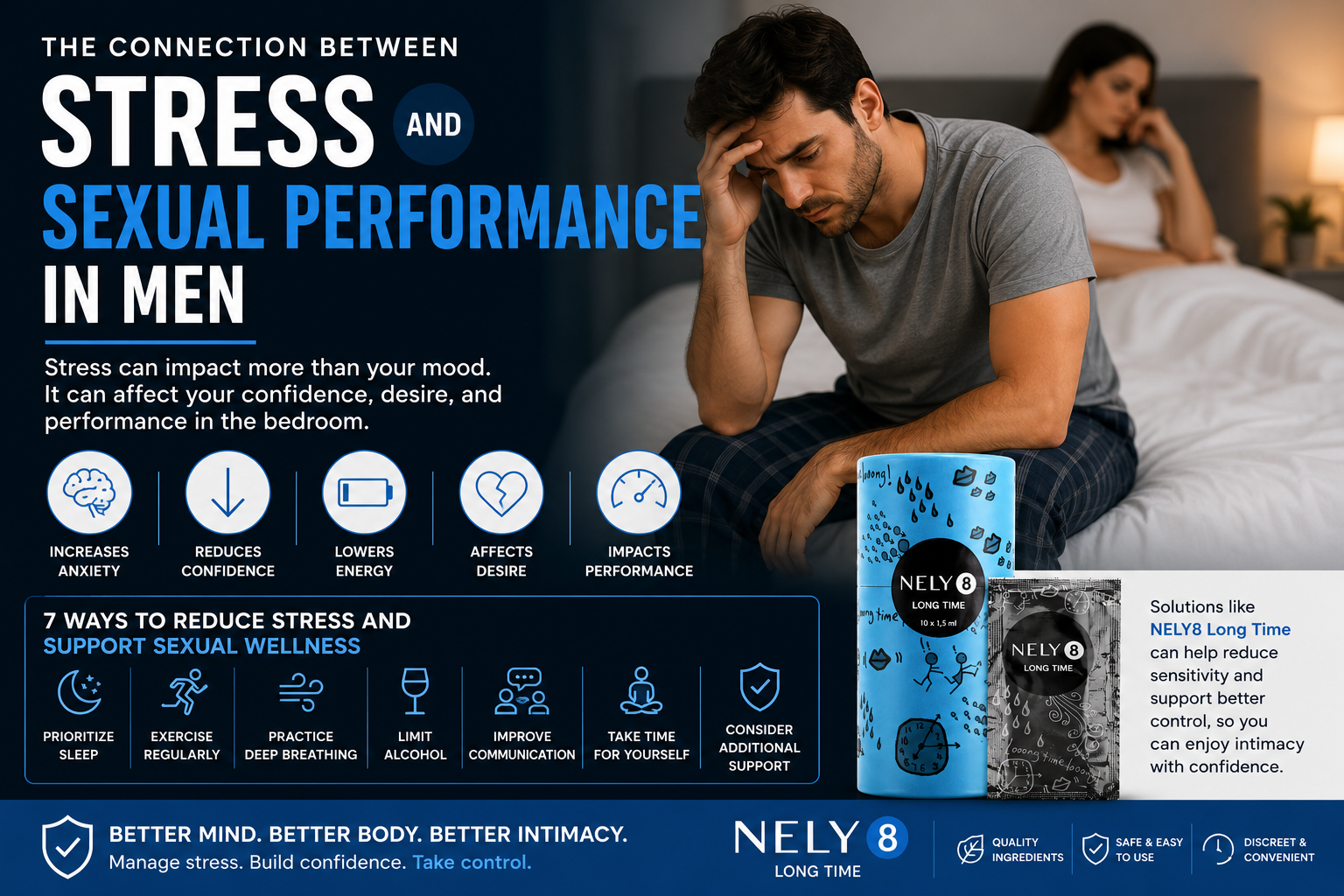
Discover how stress can affect male sexual performance, confidence, and intimacy. Learn practical strategies to reduce stress and improve overall sexual wellness.
The Connection Between Stress and Sexual Performance in Men
Modern life can be stressful. Work responsibilities, financial pressures, family obligations, and everyday challenges can all take a toll on mental and physical well-being.
What many men don’t realize is that stress can also have a significant impact on sexual performance.
Understanding the connection between stress and intimacy can help men take steps toward a healthier and more satisfying sex life.
How Stress Affects the Body
When you’re stressed, your body releases hormones such as cortisol and adrenaline.
These hormones are useful in short-term situations, but chronic stress can negatively affect many aspects of health, including:
- Energy levels
- Sleep quality
- Mood
- Focus
- Sexual desire
- Sexual performance
Over time, excessive stress may interfere with both physical and psychological aspects of intimacy.
Stress and Sexual Confidence
Stress often creates a cycle that can be difficult to break.
A man may experience stress from work or personal responsibilities, which affects his confidence during intimacy. This can lead to increased worry about performance, creating even more stress.
The result may include:
- Reduced confidence
- Difficulty relaxing
- Less enjoyment during intimacy
- Increased performance anxiety
Can Stress Contribute to Premature Ejaculation?
Research suggests that psychological factors such as anxiety and stress may contribute to difficulties with ejaculatory control in some men.
When the mind is focused on worry rather than enjoyment and connection, maintaining control can become more challenging.
This is why many experts recommend addressing both physical and mental wellness when seeking improvement.
Signs That Stress May Be Affecting Your Intimate Life
Common signs include:
- Constant worrying
- Difficulty sleeping
- Feeling mentally exhausted
- Reduced sexual desire
- Increased irritability
- Difficulty staying present during intimacy
Recognizing these signs is an important first step.
7 Ways to Reduce Stress and Support Sexual Wellness
1. Prioritize Sleep
Sleep is essential for hormone regulation, recovery, and overall health.
Most adults benefit from 7–9 hours of quality sleep per night.
2. Exercise Regularly
Physical activity is one of the most effective natural stress relievers.
Walking, running, weight training, and cycling can all support both mental and physical wellness.
3. Practice Deep Breathing
Simple breathing exercises can help calm the nervous system and reduce tension.
4. Limit Alcohol Consumption
While alcohol may seem relaxing initially, excessive consumption can negatively impact sexual performance.
5. Improve Communication
Open communication with your partner can reduce pressure and strengthen emotional connection.
6. Take Time for Yourself
Hobbies, outdoor activities, and relaxation techniques can help create balance in daily life.
7. Consider Additional Support
Some men choose products designed to help support confidence and control during intimacy.
Products such as Nely8 Long Time can be incorporated into a broader wellness routine alongside healthy lifestyle habits.
Frequently Asked Questions
Can stress really affect sexual performance?
Yes. Stress can impact confidence, focus, desire, and overall sexual wellness.
Does reducing stress improve intimacy?
Many men report improvements in confidence and satisfaction when stress levels are better managed.
Is stress-related performance anxiety common?
Yes. Performance anxiety is one of the most common psychological factors affecting intimacy.
Final Thoughts
Stress is a normal part of life, but chronic stress can affect far more than your mood. It may influence confidence, intimacy, and overall sexual wellness.
By prioritizing sleep, exercise, communication, and healthy habits, men can take meaningful steps toward reducing stress and improving their quality of life.
Remember that sexual wellness is closely connected to overall wellness. Taking care of your mind and body benefits every aspect of your health.


